
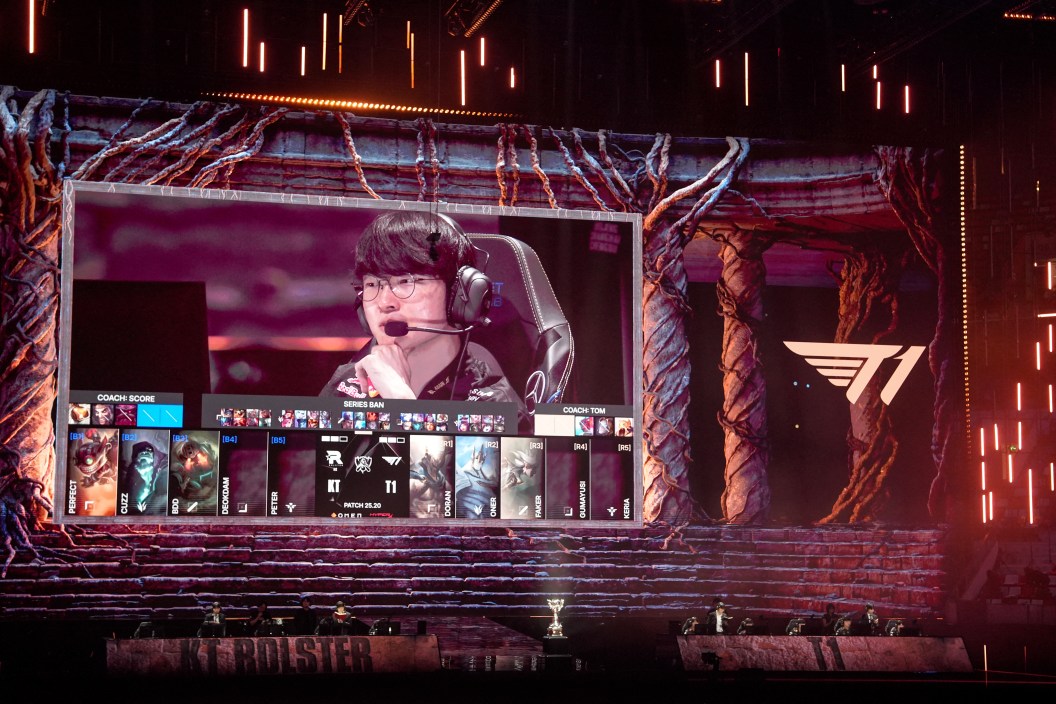
Lee "Faker" Sang-hyeok has added another remarkable achievement to a career that many already consider unmatched in esports history.
Videos by FanBuzz
The League of Legends superstar was recently named to TIME's list of the 100 Most Influential People in Sports, making him one of the most recognizable gaming figures ever to receive the honor.
The list features athletes, executives and influential figures from across the sports world, with NBA legend LeBron James appearing on the cover.
For many esports fans, Faker's inclusion comes as little surprise.
Often referred to as "The Unkillable Demon King," the South Korean star is widely regarded as the greatest League of Legends player of all time. During his career with T1, Faker has won a record six world championships, including each of the last three.
TIME highlighted those accomplishments while also noting his status as the first inductee into the League of Legends Hall of Legends.
The recognition also reflects the growing influence of esports on the global sports landscape.
What was once viewed as a niche hobby has evolved into a multibillion-dollar industry with worldwide audiences, major sponsorships and professional stars whose popularity rivals that of athletes in traditional sports.
Faker has become the face of that growth.
His career has attracted a devoted fan base around the world, with supporters often treating him less like a gamer and more like a sports icon. Over the years, T1 has partnered with major global brands including Nike, Red Bull and Mercedes-Benz, while Faker himself has become one of the most recognizable names in competitive gaming.
Following the announcement, Faker thanked TIME and esports fans around the world for the recognition.
For a player who has spent more than a decade redefining what success looks like in esports, the latest honor serves as another reminder that competitive gaming has firmly entered the mainstream sports conversation.
