
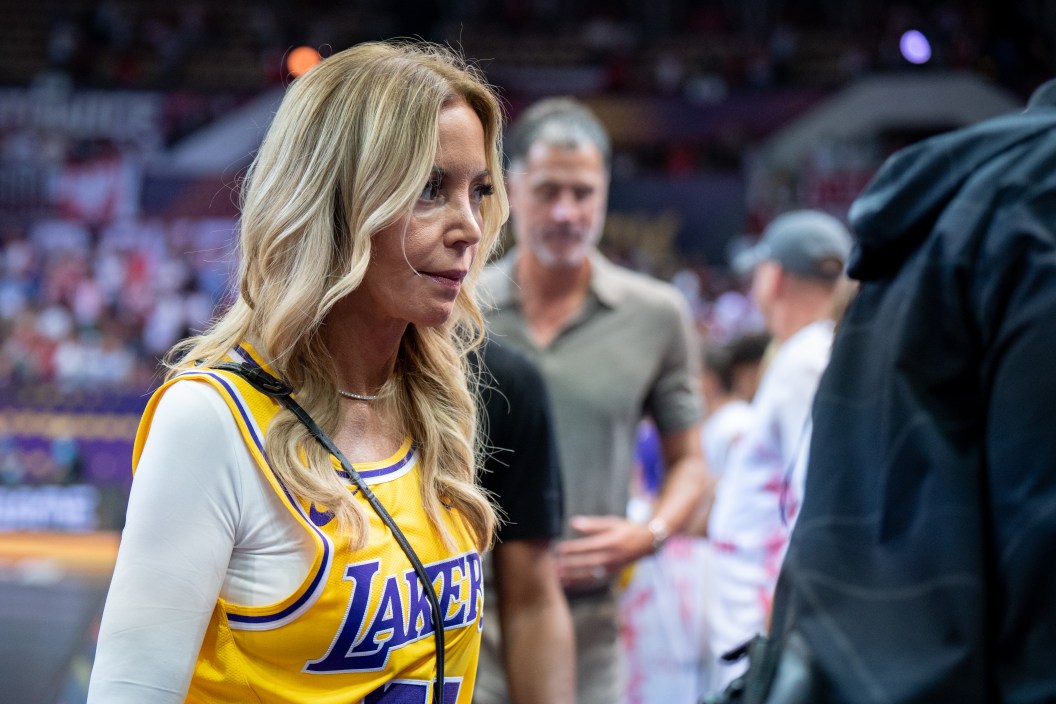
The relationship between LeBron James and Jeanie Buss may not be as smooth as it once appeared.
Videos by FanBuzz

Getty
According to a detailed report from ESPN, Buss privately grew frustrated with James over what she viewed as an outsized ego and the level of influence he and Klutch Sports held within the Los Angeles Lakers organization. Sources told ESPN that Buss questioned James' accountability, particularly in the aftermath of the failed Russell Westbrook trade ahead of the 2021-22 season.
James joined the Lakers in 2018 in a franchise-altering move after the team missed the playoffs five straight seasons. L.A. stumbled in his first year but captured its 18th championship in 2020 inside the Orlando bubble. Publicly, James was widely credited as the savior of a proud franchise. Privately, that narrative reportedly did not sit well with Buss.
According to ESPN, Buss believed the credit should have gone to the front office for recruiting James rather than the idea that he arrived and fixed everything himself. Team sources also said James had signaled as early as 2017 that he intended to leave Cleveland for Los Angeles.
Tensions reportedly worsened after the Westbrook experiment collapsed, producing a 33-49 record and no playoff berth. Buss felt the trade was made largely to satisfy James, then believed he failed to own his role when it backfired. At one point during the 2022 season, she even considered trading him.
The relationship cooled further after the Lakers drafted Bronny James in 2024. Buss reportedly felt James should have been more appreciative of the move that allowed father and son to play together.
Now in what could be his final season with the franchise, James opted into a $52.6 million deal, averaging 22.5 points while seeing his All-Star starting streak end. The Lakers sit fifth in the West, and behind the scenes, the partnership looks far more complicated than the occasional success of the James era suggests.
