
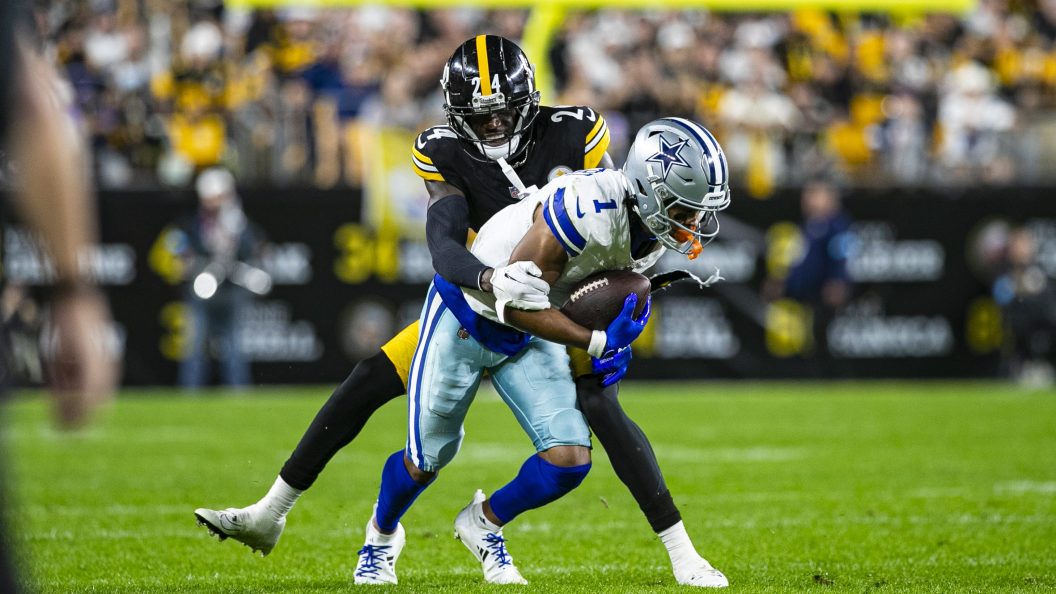
The Dallas Cowboys have made a light-night move in an attempt to strengthen a defense that currently ranks 30th in the NFL after three weeks.
Videos by FanBuzz
According to Tom Pelissero of The Ringer and Netflix Sports, the Pittsburgh Steelers are sending cornerback Joey Porter Jr. to the Dallas Cowboys in exchange for a 2027 sixth-round pick and a 2028 second-round pick.
This deal came together on Wednesday night, and it ended an impasse between Porter and the Steelers. The fourth-year player had not participated in training camp amid contract talks with the Steelers.
He then remained inactive through the first three weeks of the NFL season while citing a back injury. The Steelers listed him as inactive for Thursday night's game against the Browns with a designation of "not injury related/conditioning/back."
Porter, whose father is four-time Pro Bowler Joey Porter, landed with the Steelers as the 32nd overall pick in the 2023 NFL Draft. He has spent three seasons with the AFC North team while playing in 47 games and starting 41.
Porter has accounted for three interceptions, 31 passes defensed, one sack, and 165 combined tackles. Now, he will head to the Cowboys, where he will be expected to become an immediate contributor.
This is not the first time that the Cowboys have made an in-season trade in an effort to bolster the defense. Last season, this team sent a 2027 first-round pick and a 2026 second-round pick to the Jets in exchange for defensive lineman Quinnen Williams. He then signed a three-year contract extension worth $105.9 million.
The expectation is that Porter will play out this season under the terms of his rookie contract. Dallas will then have an opportunity to work out a deal with him before the start of free agency in March.
The team could also opt to use the franchise tag, which would keep Porter in the building for another year while paying him the average of "the top five salaries at the player's position over the last five years or 120% of his previous salary (whichever is greater)."
