
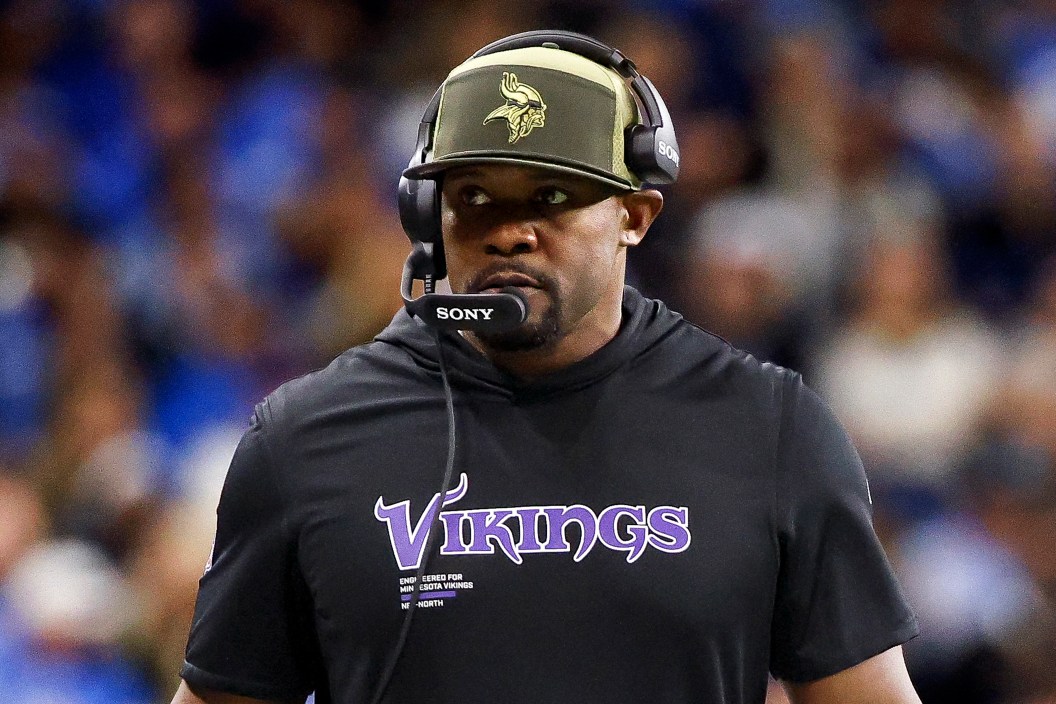
Nearly four years after it began, a central question in the NFL's legal fight with Brian Flores is inching closer to a definitive answer, reports Mike Florio of Pro Football Talk.
Videos by FanBuzz
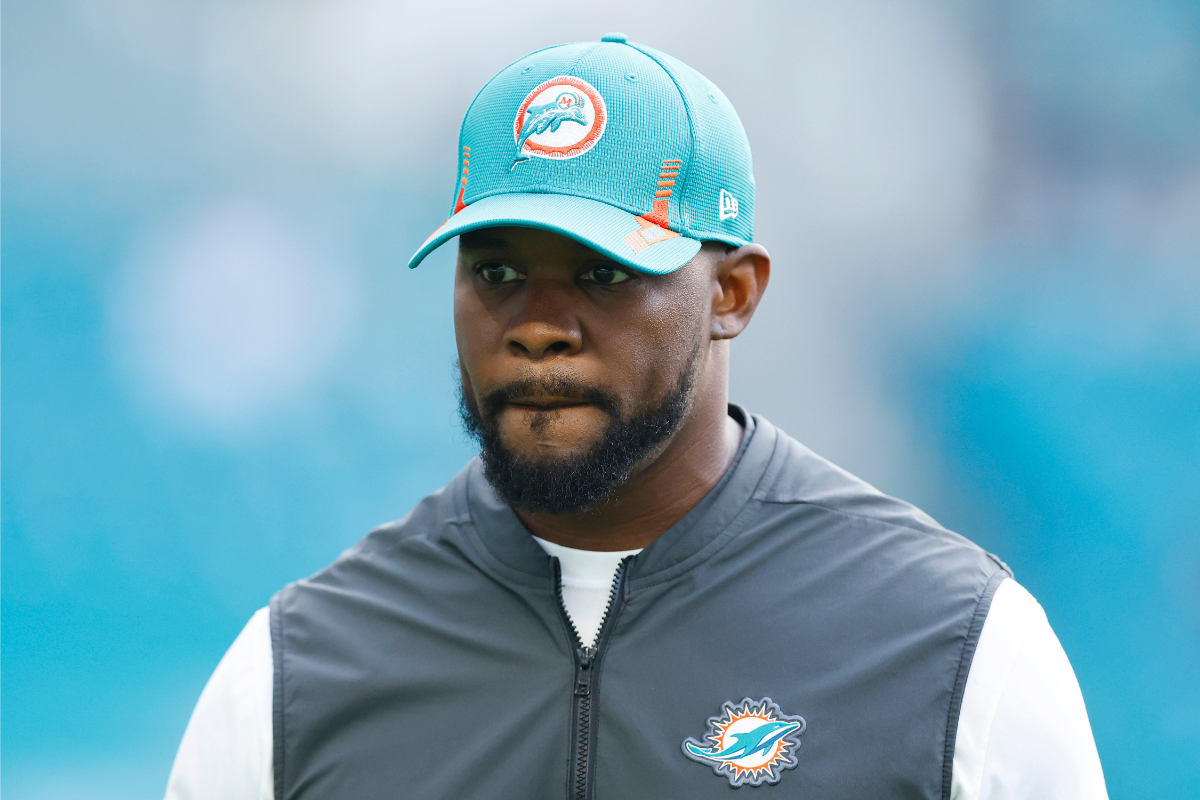
Photo by Michael Reaves/Getty Images
The league has filed a petition for a writ of certiorari with the Supreme Court of the United States, asking the Court to decide whether Flores' civil lawsuit should be resolved in open court or forced into arbitration.
Flores filed suit in February 2022 against the NFL and several teams, including the Miami Dolphins, New York Giants, Denver Broncos, and Houston Texans, alleging racial discrimination in hiring practices. He is now the defensive coordinator for the Minnesota Vikings.
The legal question before the Supreme Court is narrow but significant. The league wants clarity on whether an arbitration agreement is automatically unenforceable under federal law when it designates the league commissioner as the default arbitrator and allows that same commissioner to control the arbitration process.
That framing is intentional. The NFL is attempting to avoid a broader ruling that could ripple far beyond sports and into corporate America, where companies frequently rely on arbitration clauses. Even so, the league's position is clear. It wants disputes involving the NFL and its teams decided internally, with authority resting in the office of the commissioner.
The petition, which spans 25 pages, is only the first step. The Supreme Court receives thousands of such requests each year and accepts only a small fraction. If the Court declines to hear the case, the lower court ruling stands. If it agrees, the process could stretch on for months or longer.
That lower court ruling came from the U.S. Court of Appeals for the Second Circuit, which invalidated the NFL's arbitration provision. The court concluded that the process lacks independence, a finding that cuts to the heart of the issue.
At stake is whether a sports league can place its commissioner, an executive hired and compensated by the league and its owners, in charge of resolving legal claims brought against that same league. The NFL has relied on that structure for years. It wants to continue doing so.
Critics argue the arrangement is fundamentally unfair. Expecting a commissioner to act as a neutral decision-maker in disputes involving the league is a conflict in plain sight. No matter how carefully the process is dressed up, the imbalance is difficult to ignore.
Now, the question moves to the highest court in the country. The Supreme Court will decide whether to take the case and, if it does, whether the NFL's long-standing approach to arbitration is compatible with federal law.
