
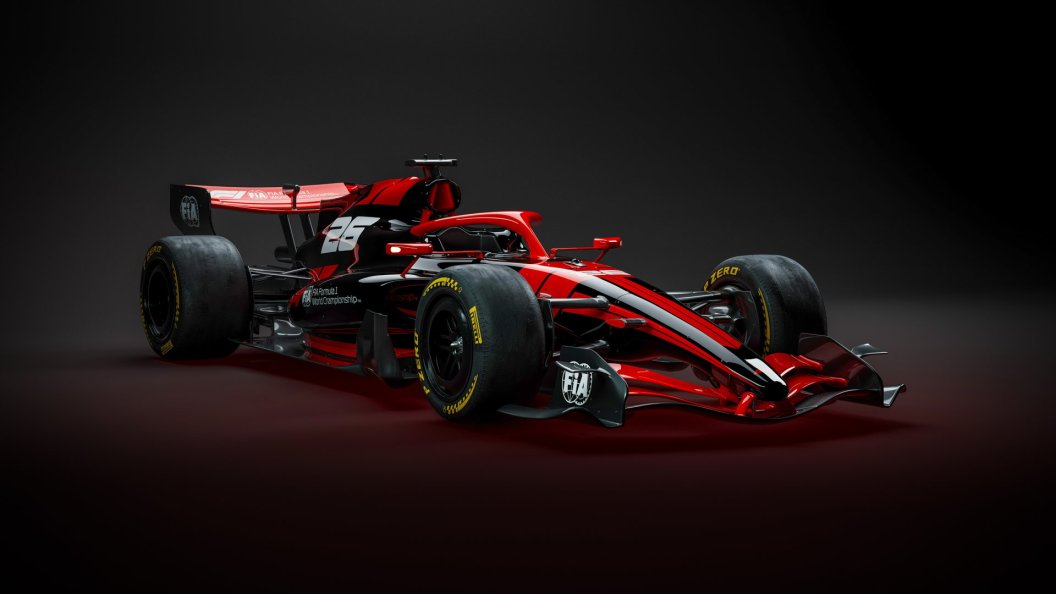
Some major changes will take place in Formula 1 ahead of the 2026 season as the racing series updates its regulations, cars, and power units.
Videos by FanBuzz
The series detailed the major changes on Wednesday with a deep dive video and press release. The provided information noted that the cars will now be 200 millimetres shorter (7.87 inches) for an overall length of 3,400 millimetres (133.86 inches).
Additionally, the width of the race cars will now be 1,900 millimetres (74.80 inches) and 770 kilograms (1,697.56 pounds). The updated cars will have 40% less drag and approximately 15-30% less downforce. F1 notes that this will make the cars more agile while putting more control in the hands of the competitors.
Meet the 2026 evolution of Formula 1.#F1 pic.twitter.com/5WpMonkQzV
— Formula 1 (@F1) December 17, 2025
Engineers removed the Drag Reduction System for the updated car, replacing it with adjustable front and rear wings. This change will enable more grip and speed at pivotal moments of the race.
As F1 explained, the setups vary based on the location of the car. One mode is for the corners. Another mode is for the straight sections.
The tires will remain 18 inches, but they will weigh less and have less drag. The reason is that the front tires will be 25mm (.098 inches) narrower while the rear tires will be 30mm (1.18 inches) narrower.
The updated regulations include changes to the power units. The cars will feature a hybrid system with 50% internal combustion (ICE) and 50% electric power. The cars will run on advanced sustainable fuel.
Engineers also removed the MGU-H, which converts exhaust gas entropy into electrical power. They increased the power of the MGU-K kinetic energy recovery system.
The drivers will have two different options for going on offense to make a pass or using defensive maneuvers to prevent an overtake. The first is the overtake mode, which they can use when they are within one second of another car.
This provides an extra boost of power to instigate an overtake, and it replaces the Drag Reduction System. Push-to-pass is a common feature in the NTT IndyCar Series, but the F1 cars will now feature it in 2026.
Drivers will also have access to a boost mode in 2026 and beyond. This deployment tool makes use of the Energy Recovery System and gives the driver maximum power from the engine and battery at the push of a button.
The drivers will have their first opportunity to test the new regulations during a private test at Circuit de Barcelona-Catalunya on Jan. 26-30. They will then take part in two separate tests at Bahrain International Circuit on Feb. 11-13 and Feb. 18-20.
