
NASCAR has made multiple changes to the Rule Book while looking forward to the 2026 Cup Series season. This primarily focuses on the technical and testing portion.
Videos by FanBuzz
Some of these changes focus on the Cup Series car itself and some additions for the 2026 season. Another change focuses on potential new OEMs moving into the Cup Series and the testing they will be allowed.
Aero changes for 2026
Chief among these changes is an update to the aero package for tracks featuring the 750 horsepower setup — road courses and ovals under 1.5-miles in length. These tracks will feature the road course and short track aero package, which has a 3-inch spoiler instead of a 4-inch spoiler used at intermediate tracks.
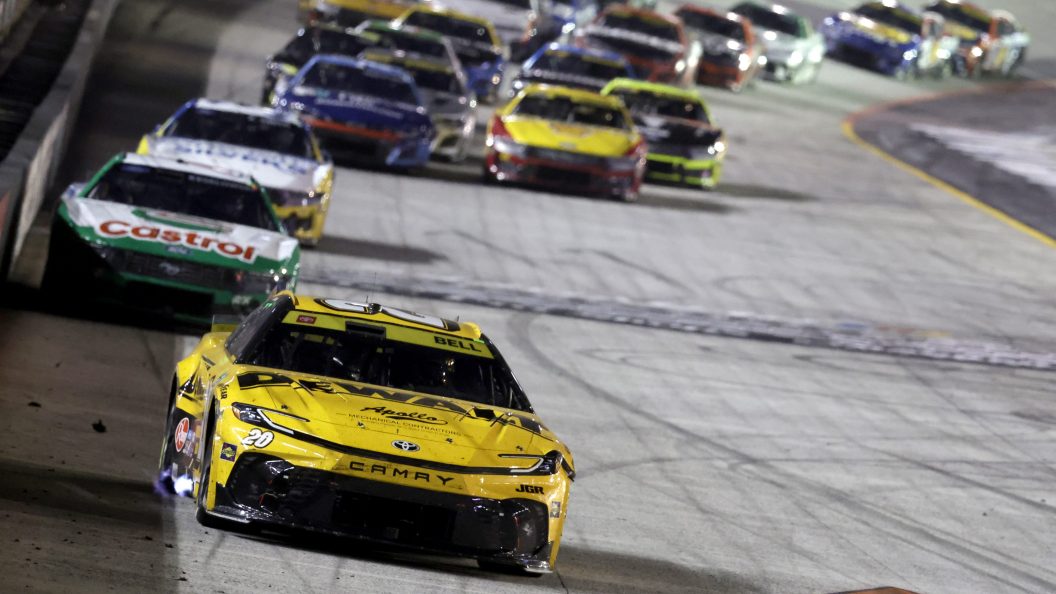
This will mark a change for multiple tracks that previously used the intermediate package. This includes Bristol Motor Speedway, Darlington Raceway, Dover Motor Speedway, Nashville Superspeedway, and World Wide Technology Raceway at Gateway.
Mandatory equipment for Cup Series cars
Last season, NASCAR put in extensive work trying to limit cars getting airborne and potentially flipping. It spent about six months developing an A-post flap, which would deploy when a car began to spin. Magnets would keep the flap in place under normal racing conditions.
Here is the A-post flap that would be deployed in a spin. There is one on each side. It is held down by magnets (silver) and tethered. NASCAR is using stronger magnets and added a small wicker at the front recently to the original design. pic.twitter.com/rLTLF0SZfv
— Bob Pockrass (@bobpockrass) August 22, 2025
The front A-post flap ultimately made its debut at Daytona International Speedway. It then returned at Talladega Superspeedway.
According to the Rule Book update on Nov. 14, teams must now install A-post flaps at every track on the schedule. They are no longer superspeedway-exclusive items.
New OEM testing
With Dodge eyeing a return to the Cup Series in the coming years, as well as Honda consistently being tied to the series, NASCAR has chosen to establish rules regarding new OEM partners testing across all three national series.
These rules will be also important considering Ram's return to the Craftsman Truck Series next season with Kaulig Racing.
According to Friday's update, new OEMs are allowed a maximum of three tests. These must take place over a maximum of two consecutive days — NASCAR could provide an exception for weather-related issues — and they must take place before March 1.
Each test can only have maximum of three affiliated organizations with a maximum of two cars each. Additionally, NASCAR will not allow testing at a new facility to the schedule, within 60 days of an event at a particular facility, or at a track that has undergone a repave.
NASCAR also provided language defining a "new OEM." One key detail is that changing the brand and/or vehicle model name does not count as a new OEM, nor does transfer of ownership. So if Jaguar purchased Toyota, this would not be a new OEM.
"An OEM may be considered a New OEM if it has not competed in the Series during the previous five Race seasons," NASCAR added.
Backup cars and engines
Teams had to pull the backup cars out of the haulers numerous times this season due to incidents in practice and/or qualifying This forced the crews to work late into the night and early the next morning preparing the backup car for the race.
NASCAR has added new rules regarding backup cars and the availability of backup engines, starting with a rule that teams must declare all backup engines at an event to NASCAR prior to the event.
"The maximum number of backup engines will be half of the total number of Teams in the Event supplied by the same engine builder," Section 14.7.1.J states.
"If the number of backup engines is not a whole number, the permitted number of backup engines will be rounded up. All Teams supplied by the engine builder will share the same declared roster of backup engines."
Section 14.7.1.K provides further details about the backup engines, saying, "Each Organization will be permitted to have one declared backup engine pre-installed in a backup vehicle.
"If a backup vehicle is not on the Event premises and if the backup engine to be used is not the declared pre-installed backup engine, the backup engine must be presented to NASCAR Officials at the racetrack and inspected and sealed prior to leaving the Event premises for installation in the backup vehicle."
