
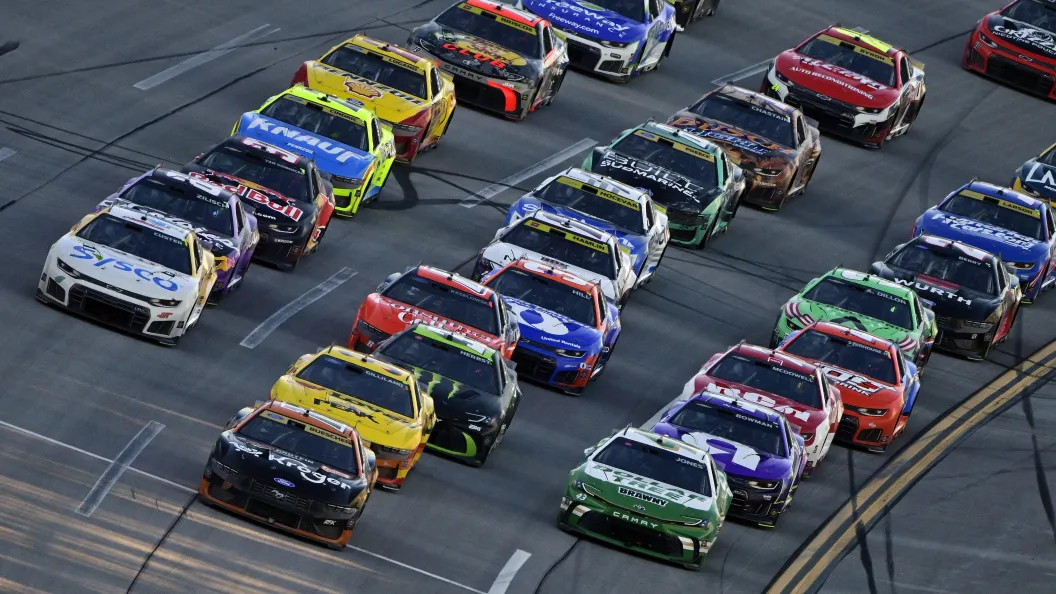
NASCAR Cup Series Managing Director Brad Moran says that the series will take steps to "correct the problem" of superspeedway fuel saving.
Videos by FanBuzz
Last weekend's race at Talladega Superspeedway featured a 98-lap opening stage, which the majority of drivers used to aggressively save fuel. This is a tactic they have used in the past to limit the time on pit road in their subsequent stops, and it is something that many drivers and crew chiefs have said is not going away.
Saving fuel is a common strategy across all of the NASCAR tracks, but last weekend's race saw the majority of the field failing to meet minimum speed. This prompted NASCAR to send a warning to all of the teams, saying that they would be black flagged.
"There's multiple things we can try to do," Moran said during an appearance on SiriusXM NASCAR Radio. "First of all, you know, adding another stage yes, that would be one way to correct it.
"Whether broadcast partners and the industry would like to go in that direction, it's a possibility. We could look at different size fuel cells. There's different ways to do it, but you need to have a way that can't be beat."
As Moran noted, simply adjusting stage lengths or making changes to the car will not fully fix the problem. Each team on the grid employs engineers who focus on maximizing fuel mileage and gaining every little advantage.
"If there's any opportunity for them to win the race and give up the beginning of the race, they take advantage of that," he said.
"So there are tools, there are things that we could do that are going to probably be quite a change if we do any of them, but we are going to do something to correct the problem."
Whatever NASCAR decides to change will remain under wraps for the time being. Talladega marked the last superspeedway race of the 2026 season.
The next trip to a drafting track will be in February 2027 as the Clash returns to Daytona International Speedway on Saturday, Feb. 13. After that is the Daytona 500 on Sunday, Feb. 21.
This crown jewel race will be the first points-paying opportunity for teams race in the pack, and it will be NASCAR's next opportunity to combat aggressive fuel-saving.
Though many drivers have questioned whether this tactic will ever go away on these larger tracks.
"The only thing that matters is how much fuel you have in your car," Ricky Stenhouse Jr. said last season at Talladega Superspeedway.
"So I guess, no matter what, if you shorten the stages and you can make it all the way on fuel, you are still trying to save so that your stop between the stages is shorter.
"Because you can put four tires on it faster than you can fill it full of fuel. So, no matter what, people are still going to save fuel and try and make it through your pit stops as fast as possible."
